News
News
Published on
2020 Mar 03Countries

Cameroon
Sensitization of the communities bordering the Technical Operational Unit of the Bouba Ndjida National Park on the preservation of biodiversity
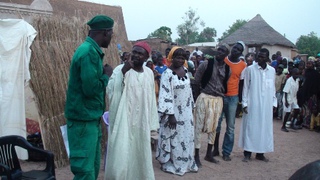
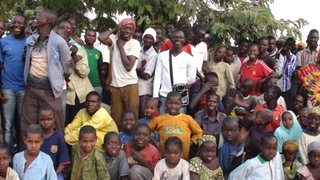
As part of the implementation of the project to involve local communities in the participatory management of Bouba Ndjidda National Park, a vast awareness-raising campaign for neighbouring communities took place from 28 February to 3 March in the villages bordering the Bouba Ndjidda Technical Operational Unit (UTO).
Funded by the European Union through the RAPAC ECOFAC V program within the framework of COMIFAC, the Project for the Involvement of Neighbourhood Communities in the Sustainable Management of Natural Resources of the UTO of Bouba Ndjidda (PICRG-BN) is currently being implemented by the Unit for Integrated Development and the Environment (CELDIE), a Cameroonian civil society organization specialized in the sustainable management of natural resources and eco-development, committed by RAPAC.
Bouba Ndjidda National Park (PNBN) was classified as a wildlife and hunting reserve in 1947, and as a National Park in 1968 on an area of 220,000 ha. It is surrounded by 7 areas of hunting interest (10, 11, 12, 12, 20, 21, 23.25) covering a total area of 550,000 ha. The whole constitutes the Operational Technical Unit (UTO) of Bouba Ndjidda (770,000 ha). It is part of the complex of Protected Areas of the Northern Region (3 National Parks and 27 Areas of Hunting Interest).
Since 2007, the PNBN has developed a partnership program with the Séna-Oura PN in Chad, which was then being created. The latter was officially created by the promulgation of law No. 011/PR/2010 on 10 June 2010. On 2 August 2011, this collaboration will lead to the signing of the memorandum of understanding relating to the creation and concerted management of the transboundary complex of protected areas of Séna Oura in Chad and Bouba Ndjidda in Cameroon. In this transboundary context, the two Protected Areas share common problems.
Specifically concerning the Bouba Ndjidda UTO, it is located in the department of Mayo Rey, in a savannah zone in the North Cameroon Region. The protected areas that constitute it (National Park and Areas of Hunting Interest) are part of the private domain of the State.
Like the majority of protected areas, the Bouba Ndjidda UTO is therefore the subject of a large number of external pressures which are the basis for multiple conflicts between the various land users:
- Food and commercial poaching
- Agricultural pressure
- Pastoral pressure
- Deforestation
- Development of the mining sector
- Climate change
To deal with this worrying situation, the Cameroonian government, through the development of the Development Plan, has opted for participatory management of the UTO involving rural actors and all stakeholders.
The Project for the Involvement of Riverine Communities in the management of the Bouba Ndjidda UTO beyond the conservation of biodiversity, intervenes in an integrated land management approach that is intended to be federative and innovative and which will formalize the foundations of sustainable collaboration, between the managers of Protected Areas and the local populations. Given the border situation of the UTO, and the partnership agreements agreed between Chad and Cameroon, it will also seek to establish a space for the exchange of experience and collaboration between the managers of the two protected areas (PN Bouba Ndjidda and PN Séna Oura).
I.Reminder of the Objectives of the PICRG-BN
1. global objective
Ensuring the integrated management of the Bouba Ndjidda UTO in its cross-border context
2. Specific Objectives
Specific objective 1: Involve local populations directly in the management of the Bouba Ndjidda PN.
Specific objective 2: Strengthen the intervention capacities of conservation services
Specific objective 3: Operationalize the partnership agreements between the Bouba Njidda Njidda PN in Cameroon and that of Séna Oura in Chad
3. Expected Results
The three main results that the project should achieve at the end of its execution are:
- Result 1: Riparian populations participate actively in the management of natural resources;
- Outcome 2: Conservation services are strengthened;
- Result 3: Cross-border collaboration is effective.
The first interventions, which concerned about 15 villages, brought together a total of 4958 sensitized people for an average of 261 people per show. Men 1446 or 29.16%, Women 1064 or 21.46, Women 1064 or 21.46, Women 1064 or 21.46, Boys 1196 or 24.12%, Girls 929 or 18.73, 73, Older men 234 or 4.71%, Older men 234 or 4.71%, Elderly women 4.71%, 4.71%, Elderly women 89 or 1.79%. It should be noted here that each site has had two representations, namely: “No firewood for lumberjacks” and “Herbivore hunters” followed by an exchange around the problem of abusive felling of wood, poaching, small-scale fishing...