Document
Document
File Name
strategie_nationale_LAB_et_LCF_Final_FR.pdfFile Type
PDF DocumentFile Size
5.89 MBCreated Date
2022 Jan 18Updated Date
2022 Jan 18Published on
2022 Jan 18Countries

Cameroon
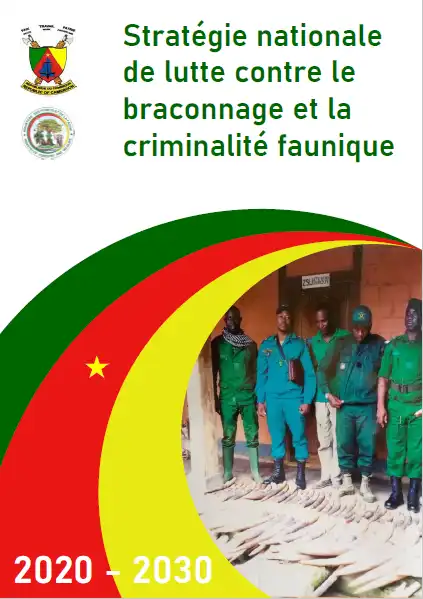
National strategy to combat poaching and wildlife crime
Among the reforms undertaken by Cameroon to ensure the implementation of its forest policy, developed in accordance with its commitments and in accordance with the main guidelines of international policies, the country has adopted a set of regulatory instruments, including the National Strategy for Forest and Wildlife Control of 2005. The latter was developed and implemented with the support of development partners. However, its operational framework has deficits that highlight its vulnerability in the face of, among other things: the rise of wildlife crime, the complexity of its ramifications with other forms of illicit activities, the explosion in demand for wildlife products and the expansion of industrial facilities in the national landscape. This strategy is therefore an update of this reference document. For its development, four phases were developed: characterizing the extent of poaching, analyzing the political discourse and the control front, strategic analysis taking advantage of lessons learned, and realizing the state of needs, then estimating their values and formulating hypotheses. The strategy, which covers conceptual aspects and statistics, is formulated in such a way as to take into account the values and principles of sustainable development, the evolution of the institutional landscape, and the need for adjustments.
To do this, the objectives of the current strategy have been reconfigured, its areas of intervention reformulated, and new implementation approaches proposed. The overall objective of this strategy is to reduce the risk of species extinction in order to maintain the health of ecosystems and the well-being of populations. This strategy is divided into 7 strategic axes: (1) the legal and institutional framework; (2) protection and surveillance; (3) national, sub-regional and international cooperation; (4) communication and awareness-raising; (5) the involvement of communities and other stakeholders; (5) the involvement of communities and other stakeholders; (6) training and capacity building; and (7) sustainable mobilization of resources. These axes have been broken down into objectives, expected results and main activities.
It has proved necessary to accelerate the professionalization of wildlife management actors, to use the shared governance model and to strengthen the capacities of actors in the control chain. Public-private partnership also appears to be a recommended approach in view of the importance of the resources to be mobilized. In order to facilitate the monitoring of the performance of the strategy, a monitoring and evaluation mechanism has been proposed.
Published on
2022 Jan 18Countries
Cameroon